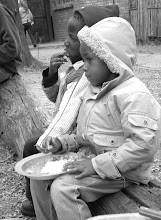
For most of the western world, the term Africa often brings a few specific things to mind…such as poverty, conflict, and HIV/AIDS. Though it would seem that these issues would be very apparent, that is far from the case. Yes, looking from the outside in it appears that each and every day in Africa is just a struggle to survive, but for them it’s just life…what they do, how they live. So, though I have been in Uganda for three months, the presence of HIV/AIDS has never been overly noticeable to me. It is just a part of African life…a part that many Africans choose not to address.
The weekend of March 20th finally gave me the opportunity to recognize and examine the mass impact this devastating disease is having on Sub-Saharan Africa. That Friday afternoon, the students of IMME piled onto our coaster bus and headed two hours northwest to the Luwero district. After a relaxing night at a local guest house, we were all more than ready for the day before us…so we thought.
Saturday was one of the hardest ‘fun’ days of my life. Spending an entire day playing with African children is enough to make anyone blissful…but when the children are HIV positive, it’s a struggle to look at each happy little face without tears coming to your eyes. In past semesters, the USP students have visited these same children and sat with them, talking about their illness and the hardship they face. This semester, though, we decided to do something little different. The children hated having to talk about it…for there is no hope for them. Talking about it all day simply reminded them about the path they were on. Instead, we spent the day giving them a little joy…playing games, eating good food, and learning traditional Buganda dances…to let them forget, if only for a few hours, what their future holds.
It truly was fun to play with them. We divided into four different groups and competed all afternoon in various activities. We did the more common activities, like the sack race, walk-with-an-egg-on-a-spoon, and three-legged race (which Kristin and I won!). My favorite activities, though, were the more traditionally African contests. These included seeing who could peel 10 matoke bananas and dress a girl in a gomaz (traditional Uganda dress) the fastest. The Ugandans in our groups were also given the responsibility of teaching the Americans a traditional Bugandan dance, which was so much fun to learn. It was thoroughly amusing watching my American friends attempt to shake their hips like Africans do. We truly are horrible dancers. =)
At the end of the day, the points were all added up and each team sat in anticipation for their score, hoping that they could claim the honor of first place. You can’t even imagine the excitement and joy of my team when they announced us as the winners. Everyone was jumping, shouting, laughing, and hugging…thrilled with our success. It was so loud and so exciting. I was so happy for our little children…that they could be so happy. When I think of it now, it seems fitting that my team’s name was Unity. We came together that day…Ugandan and American, HIV positive and healthy, poor and ‘wealthy’, hopeless and hopeful… We all joined hands as one, to fight the stigma of AIDS…to show that this isn’t a battle they have to face on their own.
In Africa, being HIV positive is very taboo. Everyone knows how the disease spreads, so there is a stigma on those who have it. There is also a great deal of fear, for though people realize you can’t get it by simply touching someone with HIV, people are still afraid they could contract it anyway. Because of this, it is very common for people who are HIV positive to not tell anyone. In fact, it is also common to find that many Africans simply don’t get tested. It seems strange to an American mind to not get tested when there’s a possibility of you being sick…but in Africa, where people realize there is no hope for them…to access effective medication or even survive…they choose to remain oblivious in hopes of living their life as happily as possible.
I must admit that I myself fit within the category of scared people to some degree. It’s natural for people to fear catching an incurable disease; however that doesn’t mean those who have it should be shunned or treated as less than human. Looking into the eyes of people who I know are HIV positive showed me just how human they are, and how pathetic my perceptions regarding them had been. They are just people…facing the reality of their own painful death. They need support and friendship, not fear and avoidance.
HIV/AIDS is a massive pandemic facing the entire world. However, it is Sub-Saharan Africa that is the most disturbed by it. In fact, it is commonly believed to have originated in the Rakai district of Uganda…a place I have visited during my stay here. Though scientists are unsure exactly how it began, HIV has spread exceedingly fast within the past 30 years. To give you a small idea of how affected Africa is by HIV/AIDS, I’m going to give you a few statistics. In American, there is an estimated 1.5 million people infected with HIV. In Sub-Saharan Africa, there is an estimated 22 million people infected…and the number is only increasing.
It’s been interesting to learn about this issue while in Uganda, for out of all African nations, Uganda is know world-wide for its affective advertisement campaign regarding AIDS, promoting abstinence and safe sex. It has been praised for bringing the percentage of new infections to a stand still in many ways. Yet, HIV/AIDS is still very prevalent here.
Following my weekend with children infected with the disease, I decided to talk to talk to my family about the topic…to learn their ideas, views, and perception of AIDS. One night, I sat down with my 19 year old brother, Sam, and spent two hours discussing the reality of HIV/AIDS in Uganda...in Mukono-town. Because it is well-known that HIV/AIDS is most commonly spread through unprotected sex, a lot of our conversation revolved around peer pressure.
Sam told me that almost all his friends and the people his age tend to idolize football (soccer) players. In fact, all the young men want to be ‘footballas,’ as Sam would say. As they watch the common behavior and lifestyle of famous football players…the parties, drinking, wealth, nice cars, and pretty women…young Ugandan men get it in their minds that all they have to do to be a ‘footballa’ is to get involved in those things. Because obtaining the wealth and prosperity isn’t always possible in such a poor nation, they go after the most obtainable thing…the women. I was told by Sam that on numerous occasions he has been pressured by friends to ‘get with a girl’ because that’s what ‘footballas’ do. Nevermind the immense risk of contracting HIV, if it’s what ‘footballas’ do, then you have to do it to be cool as well. As I listened to him tell about the pressures he faces each day, I couldn’t help but be amazed by his fortitude. Sam has one of the sweetest spirits I’ve ever seen. Seeing his conviction and passion about remaining pure…not only for safety reasons, but also out of a longing to find just one young woman to love and marry…I realized just how much God had blessed me with my Ugandan family. Throughout the semester I’ve had many conversations with other IMME students about the promiscuity they have observed within their Ugandan families, and I am so thankful that God put me with a family where I would be able to see HIV/AIDS prevention at its finest.
Wednesday, April 8, 2009

Tuesday, March 24, 2009
Etikoit Family Vacation
Though I have had the opportunity to travel overseas before, I have never had the freedom that accompanies a study abroad program. Though there are rules and regulations in place for my time in Uganda, I also have a great deal of independence. If I feel like walking into Mukono by myself during the afternoon, I can do so. If I’m interested in watching a movie at the cinema, all I’d have to do is catch a passing matatua (African taxi) and head into Kampala for a couple hours. It’s amazing how free a person can feel surrounded by an unfamiliar culture with a history of occasional violence.
Not only is Kampala a common place to find me, I also like to spend my free weekends with my family. At the beginning of the year, these times were always a little tense. Cyndi and I were never sure what to do to fill our time or how to engage our family without feeling like an awkward by-stander. This was made even more difficult by the language barrier than exists between us. But with time, my Ugandan home-life has become exactly what I’d always dreamed it would be. I have grown completely at ease with my family, and they have become at ease with me. We enjoy each others company immensely and it’s been wonderful facing each school day with the longing to go ‘home’ rather than remain on campus.
So, with this newfound ease and love for my family, I was beyond excited for March 7th…the day for Cyndi and me to experience yet another ‘normal’ family activity…a family trip. As I might have mentioned before, my sister Sarah left Bugujju in early February after only a few weeks with us to attend her final year of senior school (high school) at a Christian boarding school in Jinja. After weeks apart we really began to miss her, so when we learned her school was having an official family visitation day, we joyfully made plans to attend.
The day began early, as we all bustled around at home, preparing our picnic lunch, pressing our good clothes, and double checking that we weren’t forgetting anything. For some reason, my brothers chose not to go, opting to work in our family fields instead. So after saying a quick goodbye to Sam and Joshua, us girls all hopped into our private hire and sped off.
Quick note: In Uganda, the majority of people don’t have the wealth to afford a car. Instead, people use many different forms of public transportation to travel throughout the country. Within a town, bicycles and boda-boda’s are very common. Boda-boda’s are dirt bikes with an extra seat on the back, which you can rent to be taken pretty much anywhere. They aren’t very expensive and have the potential of being fun, but they are also very sketchy. I’ve been told they are the most dangerous form of transportation on the African continent and account for at least 70% of the patients in Kampala hospitals. Because of this, USP students aren’t allowed to ride on them. After almost being run over by more than one boda-boda, though, I’ve decided I wouldn’t want to ride one anyway. Matatu’s are also very popular and I’ve ridden on them numerous times. I’ve explained that it’s an African taxi, but to be more clear they’re basically 14 passenger vans that pick up as many people as possible alone a set path…almost like a city bus. Just above, I mentioned the term ‘private hire.’ This is probably the safest and most reliable form of transportation in Uganda. Basically, you find someone with a car and ask them to drive you around for a day/weekend. Sounded a little odd when I first heard of it, but usually when people have cars they start a private hire business and are extremely dependable for it becomes their livelihood.
So, after speeding off (not kidding…we actually sped off, for driving in Africa is vastly different that driving in the US), we found ourselves headed miles away from familiar surroundings and another mzungu other than ourselves. The experience was amazingly liberating, for it showed me just how comfortable I am in Africa. Like the majority of Americans, the thought of getting into a random car with an unknown driver, with a group of Africans in an African nation with a violent history would have made me more than a little uncertain three months ago. But on that Saturday morning as we zipped around matatus and zoomed ahead of petrol trucks, there wasn’t an ounce of apprehension within me. I felt completely at ease, completely safe, and so at home.
Having Sarah envelope me in a colossal embrace upon reaching Lord’s Mead Secondary School was so amazing and made me realize just how much I had been missing her at home. Sarah is an extremely welcoming person who loves to smile and laugh. She has high aspirations for life and has a dream to obtain her master’s degree in education somewhere in Massachusetts. It was so fun to sit beneath a tiny tree on her school campus, sharing stories about our time apart while attempting to keep the scurrying ants away from our delectable food.
Something that really warmed my heart while visiting was a very simple statement made by Sarah. She probably didn’t realize how much it touched me at the time, which makes the memory it all that much more valuable. While at school, Sarah has many things she would not have while at home. Electricity, television, and her closest friends are just a few of the perks. Not only that, but education is extremely valuable in a nation where the majority of its citizens struggle every day to provide the necessary school fees for their children. Knowing all that, when Sarah told me she wanted to go home with us so she could spend more time with Cyndi and me, I felt an amazing amount of love pour out on this precious Ugandan sister of mine. I wish she could have come home with us too…though I’m so glad she’s getting the opportunity to complete her education.
Leaving her in Jinja was hard, but I was able to leave with hope for a future meeting. Because Easter is just around the corner, I did not have to say a final goodbye to Sarah just yet. That four day weekend is going to be an amazing time to spend with my Ugandan family I adore so much.
Not only is Kampala a common place to find me, I also like to spend my free weekends with my family. At the beginning of the year, these times were always a little tense. Cyndi and I were never sure what to do to fill our time or how to engage our family without feeling like an awkward by-stander. This was made even more difficult by the language barrier than exists between us. But with time, my Ugandan home-life has become exactly what I’d always dreamed it would be. I have grown completely at ease with my family, and they have become at ease with me. We enjoy each others company immensely and it’s been wonderful facing each school day with the longing to go ‘home’ rather than remain on campus.
So, with this newfound ease and love for my family, I was beyond excited for March 7th…the day for Cyndi and me to experience yet another ‘normal’ family activity…a family trip. As I might have mentioned before, my sister Sarah left Bugujju in early February after only a few weeks with us to attend her final year of senior school (high school) at a Christian boarding school in Jinja. After weeks apart we really began to miss her, so when we learned her school was having an official family visitation day, we joyfully made plans to attend.
The day began early, as we all bustled around at home, preparing our picnic lunch, pressing our good clothes, and double checking that we weren’t forgetting anything. For some reason, my brothers chose not to go, opting to work in our family fields instead. So after saying a quick goodbye to Sam and Joshua, us girls all hopped into our private hire and sped off.
Quick note: In Uganda, the majority of people don’t have the wealth to afford a car. Instead, people use many different forms of public transportation to travel throughout the country. Within a town, bicycles and boda-boda’s are very common. Boda-boda’s are dirt bikes with an extra seat on the back, which you can rent to be taken pretty much anywhere. They aren’t very expensive and have the potential of being fun, but they are also very sketchy. I’ve been told they are the most dangerous form of transportation on the African continent and account for at least 70% of the patients in Kampala hospitals. Because of this, USP students aren’t allowed to ride on them. After almost being run over by more than one boda-boda, though, I’ve decided I wouldn’t want to ride one anyway. Matatu’s are also very popular and I’ve ridden on them numerous times. I’ve explained that it’s an African taxi, but to be more clear they’re basically 14 passenger vans that pick up as many people as possible alone a set path…almost like a city bus. Just above, I mentioned the term ‘private hire.’ This is probably the safest and most reliable form of transportation in Uganda. Basically, you find someone with a car and ask them to drive you around for a day/weekend. Sounded a little odd when I first heard of it, but usually when people have cars they start a private hire business and are extremely dependable for it becomes their livelihood.
So, after speeding off (not kidding…we actually sped off, for driving in Africa is vastly different that driving in the US), we found ourselves headed miles away from familiar surroundings and another mzungu other than ourselves. The experience was amazingly liberating, for it showed me just how comfortable I am in Africa. Like the majority of Americans, the thought of getting into a random car with an unknown driver, with a group of Africans in an African nation with a violent history would have made me more than a little uncertain three months ago. But on that Saturday morning as we zipped around matatus and zoomed ahead of petrol trucks, there wasn’t an ounce of apprehension within me. I felt completely at ease, completely safe, and so at home.
Having Sarah envelope me in a colossal embrace upon reaching Lord’s Mead Secondary School was so amazing and made me realize just how much I had been missing her at home. Sarah is an extremely welcoming person who loves to smile and laugh. She has high aspirations for life and has a dream to obtain her master’s degree in education somewhere in Massachusetts. It was so fun to sit beneath a tiny tree on her school campus, sharing stories about our time apart while attempting to keep the scurrying ants away from our delectable food.
Something that really warmed my heart while visiting was a very simple statement made by Sarah. She probably didn’t realize how much it touched me at the time, which makes the memory it all that much more valuable. While at school, Sarah has many things she would not have while at home. Electricity, television, and her closest friends are just a few of the perks. Not only that, but education is extremely valuable in a nation where the majority of its citizens struggle every day to provide the necessary school fees for their children. Knowing all that, when Sarah told me she wanted to go home with us so she could spend more time with Cyndi and me, I felt an amazing amount of love pour out on this precious Ugandan sister of mine. I wish she could have come home with us too…though I’m so glad she’s getting the opportunity to complete her education.
Leaving her in Jinja was hard, but I was able to leave with hope for a future meeting. Because Easter is just around the corner, I did not have to say a final goodbye to Sarah just yet. That four day weekend is going to be an amazing time to spend with my Ugandan family I adore so much.
Tuesday, March 17, 2009
Transitions
Kapchorwa, Uganda is a located in a very mountainous area. In fact, it is a part of the popular Mount Elgon, which is shared between Uganda and Kenya. This beautiful mountain area gives people of all nationalities the opportunity to go hiking and see some very impressive waterfalls. After spending a week on rural home stays in this area, all USP students meet at a resort near the beautiful Sipi Falls for a time of relaxation, mountain hiking, and debrief.
Arriving at the resort Friday, February 27th was an extremely difficult experience for me. In fact, simply getting on the bus and driving away from my family was difficult. While driving back to the resort, everyone in the bus was trading stories and trying to tell everyone about how wonderful their experiences were. I sat quietly at the back of the bus realizing that this was only the beginning of the hard road ahead of me.
Transitioning from Africa to America has never been easy for me. Each time I have went to a new developing country and returned, I have struggled with so many things: friendships, remaining the person I became overseas, understanding God’s grace and mercy with the new found knowledge of human suffering, and so much more. It’s a tough internal battle that happens within me with each return. Yet, though it is hard, I have always been able to handle it and come through it with the guiding hand of Jesus Christ.
What’s harder than the internal battle, though, is the apparent misunderstanding or nonchalance of the people around me. I can’t even recall the number of times I’ve been asked “how was Africa?” by people who don’t really want to know. All they want to hear is “I had a great time…held some orphans, painted a few buildings, and told them about Jesus.” They do not want to stand there and actually listen to you talk about your time in Africa…about your first day there being dumbfounded by the apparent poverty and need. About your second month there, when you realized that Africa isn’t at all like anyone imagines it…that the people aren’t all starving and infected with AIDS; about your third month when you realized a part of you never wants to leave…
They don’t actually want to listen to you talk about helping your host sister make chipati over a blazing wood fire or often catching your host brother dancing in the living room to an imaginary song. They don’t want to hear you tell them that your host mama struggles each day to provide an education for her children…or that you got offered marriage by twenty different men because of the color of your skin.
When I read that paragraph, I realize that many people would find those things interesting to know, but reading them and listening to them require two very different things. Reading it, you can think those are neat stories and go about your daily life. If I was standing in front of you talking, though, you’d actually have to feel the emotions I have behind those words. People only want to hear “I had a great time” because it’s easier that having to share in your pain…your agony over witnessing such hardship, struggling with the emotions of being so blessed when surrounded by people barely getting by, longing to return to a life that somehow become home in only four short months…
It’s a struggle no one would expect, but in all reality, the hardest struggle is going home, for it hurts so much when you spend four months of your life living among some of the most amazing people you’ve ever meet…and no one will ever understand, even if they truly wish to.
Listening to the numerous stories out on that bus ride away from my Kapchorwa home, I saw just how hard going home could be. Each person in that bus had their own amazing stories and experiences to share…yet no one on the bus wanted to listen.
Just so anyone who cares knows, I do miss my home in America…my family and friends. But going back isn’t going to be easy. It’s going to be a time of major transition…a time where I will struggle between my life of the last four months and the life of my last 21 years. If I happen to withdraw from things, please don’t worry. While at Sipi Falls, I also withdrew from people, spending the time alone with my Daddy God, using His strength help me through that first transition.
I didn’t write this to make you feel guilty for not actually wanting to listen to my stories, for I’m sure you’re going to get sick of me saying “in Uganda…”, I just wanted to share how I’ve been feeling and to make you aware. If you don’t want to listen to me sharing about my life in Uganda, that’s perfectly ok, and I will understand. I just ask for a little understanding, for when I leave Uganda that’s not the end of it for me. I’m bringing a little piece of it back…while in turn leaving a little bit of my heart behind.
Arriving at the resort Friday, February 27th was an extremely difficult experience for me. In fact, simply getting on the bus and driving away from my family was difficult. While driving back to the resort, everyone in the bus was trading stories and trying to tell everyone about how wonderful their experiences were. I sat quietly at the back of the bus realizing that this was only the beginning of the hard road ahead of me.
Transitioning from Africa to America has never been easy for me. Each time I have went to a new developing country and returned, I have struggled with so many things: friendships, remaining the person I became overseas, understanding God’s grace and mercy with the new found knowledge of human suffering, and so much more. It’s a tough internal battle that happens within me with each return. Yet, though it is hard, I have always been able to handle it and come through it with the guiding hand of Jesus Christ.
What’s harder than the internal battle, though, is the apparent misunderstanding or nonchalance of the people around me. I can’t even recall the number of times I’ve been asked “how was Africa?” by people who don’t really want to know. All they want to hear is “I had a great time…held some orphans, painted a few buildings, and told them about Jesus.” They do not want to stand there and actually listen to you talk about your time in Africa…about your first day there being dumbfounded by the apparent poverty and need. About your second month there, when you realized that Africa isn’t at all like anyone imagines it…that the people aren’t all starving and infected with AIDS; about your third month when you realized a part of you never wants to leave…
They don’t actually want to listen to you talk about helping your host sister make chipati over a blazing wood fire or often catching your host brother dancing in the living room to an imaginary song. They don’t want to hear you tell them that your host mama struggles each day to provide an education for her children…or that you got offered marriage by twenty different men because of the color of your skin.
When I read that paragraph, I realize that many people would find those things interesting to know, but reading them and listening to them require two very different things. Reading it, you can think those are neat stories and go about your daily life. If I was standing in front of you talking, though, you’d actually have to feel the emotions I have behind those words. People only want to hear “I had a great time” because it’s easier that having to share in your pain…your agony over witnessing such hardship, struggling with the emotions of being so blessed when surrounded by people barely getting by, longing to return to a life that somehow become home in only four short months…
It’s a struggle no one would expect, but in all reality, the hardest struggle is going home, for it hurts so much when you spend four months of your life living among some of the most amazing people you’ve ever meet…and no one will ever understand, even if they truly wish to.
Listening to the numerous stories out on that bus ride away from my Kapchorwa home, I saw just how hard going home could be. Each person in that bus had their own amazing stories and experiences to share…yet no one on the bus wanted to listen.
Just so anyone who cares knows, I do miss my home in America…my family and friends. But going back isn’t going to be easy. It’s going to be a time of major transition…a time where I will struggle between my life of the last four months and the life of my last 21 years. If I happen to withdraw from things, please don’t worry. While at Sipi Falls, I also withdrew from people, spending the time alone with my Daddy God, using His strength help me through that first transition.
I didn’t write this to make you feel guilty for not actually wanting to listen to my stories, for I’m sure you’re going to get sick of me saying “in Uganda…”, I just wanted to share how I’ve been feeling and to make you aware. If you don’t want to listen to me sharing about my life in Uganda, that’s perfectly ok, and I will understand. I just ask for a little understanding, for when I leave Uganda that’s not the end of it for me. I’m bringing a little piece of it back…while in turn leaving a little bit of my heart behind.
Saturday, March 14, 2009
African Alarm
As I previously mentioned, my Kapchorwa homestay sister, Stella, would often tell Emily and I African stories before we would go to bed. Most of them were about the hare, which is believed to be the cleverest animal. Some of them I didn’t understand, but all of them were hilarious. I’m going to attempt to retell my favorite story. I wish you could have heard Stella tell it, but I guess that experience will have to remain forever only in my memories.
“One day, Hare grew very hungry. He was a long way from home and didn’t have any food, but as luck would have it he happened upon the house of Hyena. Hyena lived at the top of a mountain and had lots of land, so Hare proposed that together they plow the land, plant grain, and produce food. Hyena was desperately in need of help with so much land, so he welcomed Hare into his home. The next morning when they were supposed to start planting, though, Hare told Hyena he was feeling sick and couldn’t work. So Hyena went into the fields by himself. With each new day, Hare come up with a new excuse to avoid the work. By the time of harvest, Hare had done almost no work. Hyena grew very angry about this and decided to kick Hare out of the house and not allow him to take any of the grain. But Hare learned of Hyena’s plan and left in the middle of the night, taking all the grain with him.
The next morning, Hare happened upon Chicken. Chicken saw that Hare was carrying grain and mentioned that she was very hungry. Hare decided he was willing to share his grain with Chicken, so He opened up the bag and they proceeded to eat all the grain. As Chicken sat there happy, full and content, Hare devised another plan, for Hare is very clever. He looked at Chicken and said “now you’ve eaten all my grain. Only the grain didn’t actually belong to me. The grain was Hyena’s. What am I going to do now? I have nothing to give to him and it’s your fault, Chicken.” Chicken grew scared at the idea of facing Hyena, so she decided she would give Hare a panga (African term for machete) in exchange for the grain.
Taking the panga, Hare continued on his way. It wasn’t long before he came upon Zebra, who was standing next to a cow pen. Hare approached Zebra and asked what he was doing. Zebra sighed and said “I need to slaughter this cow, but have nothing sharp to use.” Hare, being very clever indeed, offered Zebra the panga to use. While slaughtering the cow, though, the panga broke. Seeing this, Hare exclaimed “You have broken my panga! Only it isn’t actually my panga. The panga belongs to Chicken. Now what am I going to give Chicken in exchange for her broken panga?” Zebra felt bad, so he asked Hare what he would want in exchange. Hare thought carefully, then offered to take the cow’s head in exchange for the panga. Happily, Zebra handed over the cow’s head.
Hare then made is way to the closest river. After checking the surrounding area for people, Hare walked out into the river and buried the cow’s head until only the horns were sticking up above the waves. Then he became to scream the African Alarm, “Ooo-Wee! Ooo-wee!” (In Africa, any time the “African Alarm” is heard everyone comes running. The alarm varies depending on where you’re at. It is even different in Mukono and Kapchorwa). As expected, everyone nearby came running. Cleverly, Hare ran along the edge of the river acting nervous. “I was leading my cow across the river,” he told everyone. “When I we were almost across, my poor cow sunk deep into the ground. You must help me get it out!” Because it is Africa and everyone helps everyone, all those around the river ran to find a rope. When one was found, they tied the rope around the horns and began to pull, trying to save the poor cow. When they pulled, though, the cow’s head flew out of the river and landed on the bank.
Crying out in agony, Hare pretended to lament the death of his cow. He quickly explained to everyone that the cow didn’t actually belong to him. He was in need of the cow because he owed Hyena something after taking his grain. He said that because this was the village’s river and it had taken his cow, the village owed him the cow so Hyena wouldn’t get mad at him. Feeling responsible, the village quickly found a cow to give Hare.
Hare took the cow and walked away, content with all that his cleverness and yielded to him.
The End.”
I realize this may not be as funny in writing as it was hearing it from Stella, but I didn’t want to forget this story…nor did I want to forget sitting on my bed in our dirt/manure walled room, laughing hysterically as Stella described the cow’s head flying out of the river. Though the story didn’t really have much of a point, it is one story I hope I never forget.
“One day, Hare grew very hungry. He was a long way from home and didn’t have any food, but as luck would have it he happened upon the house of Hyena. Hyena lived at the top of a mountain and had lots of land, so Hare proposed that together they plow the land, plant grain, and produce food. Hyena was desperately in need of help with so much land, so he welcomed Hare into his home. The next morning when they were supposed to start planting, though, Hare told Hyena he was feeling sick and couldn’t work. So Hyena went into the fields by himself. With each new day, Hare come up with a new excuse to avoid the work. By the time of harvest, Hare had done almost no work. Hyena grew very angry about this and decided to kick Hare out of the house and not allow him to take any of the grain. But Hare learned of Hyena’s plan and left in the middle of the night, taking all the grain with him.
The next morning, Hare happened upon Chicken. Chicken saw that Hare was carrying grain and mentioned that she was very hungry. Hare decided he was willing to share his grain with Chicken, so He opened up the bag and they proceeded to eat all the grain. As Chicken sat there happy, full and content, Hare devised another plan, for Hare is very clever. He looked at Chicken and said “now you’ve eaten all my grain. Only the grain didn’t actually belong to me. The grain was Hyena’s. What am I going to do now? I have nothing to give to him and it’s your fault, Chicken.” Chicken grew scared at the idea of facing Hyena, so she decided she would give Hare a panga (African term for machete) in exchange for the grain.
Taking the panga, Hare continued on his way. It wasn’t long before he came upon Zebra, who was standing next to a cow pen. Hare approached Zebra and asked what he was doing. Zebra sighed and said “I need to slaughter this cow, but have nothing sharp to use.” Hare, being very clever indeed, offered Zebra the panga to use. While slaughtering the cow, though, the panga broke. Seeing this, Hare exclaimed “You have broken my panga! Only it isn’t actually my panga. The panga belongs to Chicken. Now what am I going to give Chicken in exchange for her broken panga?” Zebra felt bad, so he asked Hare what he would want in exchange. Hare thought carefully, then offered to take the cow’s head in exchange for the panga. Happily, Zebra handed over the cow’s head.
Hare then made is way to the closest river. After checking the surrounding area for people, Hare walked out into the river and buried the cow’s head until only the horns were sticking up above the waves. Then he became to scream the African Alarm, “Ooo-Wee! Ooo-wee!” (In Africa, any time the “African Alarm” is heard everyone comes running. The alarm varies depending on where you’re at. It is even different in Mukono and Kapchorwa). As expected, everyone nearby came running. Cleverly, Hare ran along the edge of the river acting nervous. “I was leading my cow across the river,” he told everyone. “When I we were almost across, my poor cow sunk deep into the ground. You must help me get it out!” Because it is Africa and everyone helps everyone, all those around the river ran to find a rope. When one was found, they tied the rope around the horns and began to pull, trying to save the poor cow. When they pulled, though, the cow’s head flew out of the river and landed on the bank.
Crying out in agony, Hare pretended to lament the death of his cow. He quickly explained to everyone that the cow didn’t actually belong to him. He was in need of the cow because he owed Hyena something after taking his grain. He said that because this was the village’s river and it had taken his cow, the village owed him the cow so Hyena wouldn’t get mad at him. Feeling responsible, the village quickly found a cow to give Hare.
Hare took the cow and walked away, content with all that his cleverness and yielded to him.
The End.”
I realize this may not be as funny in writing as it was hearing it from Stella, but I didn’t want to forget this story…nor did I want to forget sitting on my bed in our dirt/manure walled room, laughing hysterically as Stella described the cow’s head flying out of the river. Though the story didn’t really have much of a point, it is one story I hope I never forget.
Three Maids a Milking
The soft ting-ting-ting of fresh cows milk falling quickly into the tin milk pail drew me closer to the cow pen near my rural home in Kapchorwa. Fascinated by Mama Lydia’s swiftness and skill, I decided as I watched her milk our three cows that before leaving I would milk one as well.
A few days later, I got my chance. As Stella tied up Maria (our nice cow), Emily and I stood nearby waiting excitedly. After securing Maria to the closest fence post, Stella told me to enter the pen. Being a rural girl, I happily tried to the scale the fence. I learned quite quickly, however, that there’s a reason people don’t usually wear skirts when working on a farm. After narrowly escaping the experience of tasting a cow pie, I settled down at Maria’s side and listened to Stella’s brief instructions. Then, grinning like a fool, I intimidated her hand movements watching for milk to appear. Nothing… Horrified at my horrible failure, I did the only thing I knew to do…laugh hysterically. Thankfully, my next attempt went much better and it wasn’t long before I was milking a cow like a pro. After a few minutes, I let Emily have a turn. Being a city girl, she was even more excited than I at our newly acquired abilities. There’s just something wonderful about knowing how to get food even when there isn’t a grocery store nearby.
Stella soon took over and milked the rest of our cows. In the end, Emily and I only milked about 2 cups of the gallon (or so) of milk, but we felt proud of our accomplishment none-the-less. It wasn’t until later that afternoon that we learned some very exciting news…Emily and I could now get married! Apparently in Sebei culture, unless a woman knows how to milk a cow she is not allowed to get married. Finally! I had always wondered why I’ve never had any prospects…if only I’d learned how to milk a cow sooner! =)
During my week in Kapchorwa, I learned much more than just how to milk a cow. My family was very agriculturally based, so Emily and I got to spend quite a bit of time working ion the fields. One of my favorite things we did was harvest coffee. Uganda, especially Eastern Uganda, plays a large part in producing the coffee drank by coffee-lovers worldwide. My family had a large plot of land devoted to coffee trees. For many hours of the week, Emily and I found ourselves deep within those trees slowly harvesting the precious beans.
Coffee trees are quite interesting to look at. Fairly short, they produce massive amounts of green coffee bean, which weigh down the branches. When the beans turn a rosy red, then it is time to harvest them. Emily and I would spend hours picking the little red beans, leaving the green ones on to turn red in their own time. By the end of our week, we have packed a fairly large basin full to the brim.
The last full day in Kapchorwa, Stella and Papa Yovan taught us the final step before the beans were ready to sell to mass coffee producers. Our basin full of coffee beans was filled with water and let sit all day. Then, after they had become softened by the water, we used a special pulping machine to remove the seeds from within the bean (there are 2 within every bean). The machine was pretty large and you had to spin the handle around and around for what seemed like hours to pulp all the beans, but it was so much fun. After completing this task, the beans were soaked over night, dried, and then sold. So if you ever happen to be drinking coffee from Mt. Elgon, Uganda…just know that I might have been the one to harvest your deliciously caffeinated beverage.
A few days later, I got my chance. As Stella tied up Maria (our nice cow), Emily and I stood nearby waiting excitedly. After securing Maria to the closest fence post, Stella told me to enter the pen. Being a rural girl, I happily tried to the scale the fence. I learned quite quickly, however, that there’s a reason people don’t usually wear skirts when working on a farm. After narrowly escaping the experience of tasting a cow pie, I settled down at Maria’s side and listened to Stella’s brief instructions. Then, grinning like a fool, I intimidated her hand movements watching for milk to appear. Nothing… Horrified at my horrible failure, I did the only thing I knew to do…laugh hysterically. Thankfully, my next attempt went much better and it wasn’t long before I was milking a cow like a pro. After a few minutes, I let Emily have a turn. Being a city girl, she was even more excited than I at our newly acquired abilities. There’s just something wonderful about knowing how to get food even when there isn’t a grocery store nearby.
Stella soon took over and milked the rest of our cows. In the end, Emily and I only milked about 2 cups of the gallon (or so) of milk, but we felt proud of our accomplishment none-the-less. It wasn’t until later that afternoon that we learned some very exciting news…Emily and I could now get married! Apparently in Sebei culture, unless a woman knows how to milk a cow she is not allowed to get married. Finally! I had always wondered why I’ve never had any prospects…if only I’d learned how to milk a cow sooner! =)
During my week in Kapchorwa, I learned much more than just how to milk a cow. My family was very agriculturally based, so Emily and I got to spend quite a bit of time working ion the fields. One of my favorite things we did was harvest coffee. Uganda, especially Eastern Uganda, plays a large part in producing the coffee drank by coffee-lovers worldwide. My family had a large plot of land devoted to coffee trees. For many hours of the week, Emily and I found ourselves deep within those trees slowly harvesting the precious beans.
Coffee trees are quite interesting to look at. Fairly short, they produce massive amounts of green coffee bean, which weigh down the branches. When the beans turn a rosy red, then it is time to harvest them. Emily and I would spend hours picking the little red beans, leaving the green ones on to turn red in their own time. By the end of our week, we have packed a fairly large basin full to the brim.
The last full day in Kapchorwa, Stella and Papa Yovan taught us the final step before the beans were ready to sell to mass coffee producers. Our basin full of coffee beans was filled with water and let sit all day. Then, after they had become softened by the water, we used a special pulping machine to remove the seeds from within the bean (there are 2 within every bean). The machine was pretty large and you had to spin the handle around and around for what seemed like hours to pulp all the beans, but it was so much fun. After completing this task, the beans were soaked over night, dried, and then sold. So if you ever happen to be drinking coffee from Mt. Elgon, Uganda…just know that I might have been the one to harvest your deliciously caffeinated beverage.
Thursday, March 12, 2009
Country Bumpkin
Northeast of Mukono raising high above the Ugandan plains of Soroti, Mount Elgon towers above the lush green farmland of Kapchorwa district. Acre after acre of matoke trees, coffee trees, cabbage, and greens line the dusty red dirt roads. Primary school children run along those same roads carrying small jerry cans, headed to and from the closest watering hole. Strong winds of fresh mountain air soar up the mountain side, occasionally reminding noses of the campfires and livestock nearby.
Standing high on that mountain overlooking rural Uganda, the gentle breeze toying with my newly plaited hair, I couldn’t help be feel heartbroken. With the lack of electricity, income, and clean water (without a half mile hike), it would make sense to feel some agony over the struggles rural African’s face every day. Yet my heart wasn’t breaking for them…I was crying inside for me. In that wonderful place I’d found a home. Tears stung my eyes at the thought of leaving, knowing I might never return…
My rural family was absolutely amazing. It consisted of a number of people. Being rural and Africa, it was a large family made up of parents, 10 siblings, grandchildren, cousins, and children taken in off the streets. Because it’s school time, though, only a few were at home during our stay. These people immediately welcomed my USP roommate, Emily, and me into their life with open arms. Here’s a little bit about each of the people who made this experience so wonderful.
Yovan, my papa: To begin with, I can’t even express to you my excitement over having a “father” again. My Mukono father doesn’t live with us due to working in western Uganda, so it was so different and such an amazing blessing, to have a father around the home. Not only was it great having a father again, it was great having him as a father particularly. Yovan places a high value in education so he began our week there with a list of things he wanted us to experience/learn before leaving. Without him, I wouldn’t have learned half of what I now know. (I’ll tell you more about each of those things in following blogs). Quite possibly my favorite trait about him was his enjoyment of laughter. Even when being serious, he knew how to laugh. For example, when he thought Emily and I hadn’t eaten enough (even though we’d eaten more than humanly possible already) he’d joke that we needed to learn how to “crush” our food like a good African. By the end of the week, we told him he was just a better “crusher” than us, which he loved to laugh about. He also joked that we needed to try lion meat. When we asked where he’d kill a lion, he said he’d sneak out at night, break into the closest zoo, and be back before daylight carrying the lion on his back. As I climbed into the van to leave, I told him when I came back a lion better be waiting for me. It was good to hear his laughter as we drove away…
Lydia, my mama: The first thing I noticed about Mama Lydia was her brilliant smile. As I climbed off the van the first day, her wide welcoming smile immediately put me at ease. She didn’t speak English fluently, which made communication interesting, but we were still able to learn a lot about/from her. That first day less than an hour after arriving in Tapchorwa, Emily and I sat down with Mama and began peeling the matoke for supper. She was so excited that we were able to do this, proudly watching our fumbling fingers take an hour to peel what she could do in 10 minutes. She worked tirelessly, spending every hour of the day doing something to keep her family alive. She planted/nourished/harvested acre after acre of cabbage and greens. Then, she would wake long before morning light to sell the labor of her hands at local markets. On more than one occasion, I saw her carrying huge amounts of things upon her head: huge matoke logs, large bunches of plantains, 25 liter jerry cans full of water, and so much more. I’ll never forget the day I asked her if I could carry a plantain log on my head as well. The joy on her face was well worth the neck pain as I struggled up the mountain with 50lbs or more balancing on my head. She spent hours of each day in the smoky kitchen, preparing meals for the entire family. Never have I tasted such decedent chipati…fluffy, warm and delicious. Lydia was a true African woman…
Stella, my sister: The first night when Emily and I finally had a chance to talk alone, we had one thing we both agreed on 100%...Stella was absolutely amazing. Meeting her was like saying hi to someone you’ve never met before, but feel like you’ve know forever. She has this vivacious personality that just draws you in. Something I really appreciated was how real she was right off the bat. When moving into my Mukono home stay, I was treated as a guest for the first week. Nothing was expected of me and my family almost seemed to walk on egg shells for a while. With Stella, it was completely opposite. Within 5 minutes of us arriving, she was treating us like sisters she’s had her entire life. She wanted to play with my hair (which she later plaited…meaning braided with fake hair added in) and was willing to talk politics with us in a realistic way. No Obama worship coming from her. She was a 23 year old university student majoring in economics, so we were able to have an honest conversation about the United States, Uganda, and the struggles faced by both countries. It was wonderful! She loved the fact that we were her “baby” sisters and enjoyed taking care of us. Each night at bedtime, she’d come into our room and tell us an African tale as a bed time story (I’m going to post my favorite of the stories in another blog). Those were possibly my favorite times during the entire week. Saying goodbye to Stella at the end of the week was insanely difficult.
Faith, the street child: Originally, I thought Faith was a grandchild of Yovan and Lydia. It wasn’t until the middle of the week that I learned she was actually a street child. She lacked a family to care for her or pay for her education, so Yovan and Lydia had welcomed them into their home and paid her school fees. All they asked was for help around the house. Something that made a great impression on me was this family’s generosity. They were so willing to help those less fortunate than themselves, something I witnessed time and time again. It was very interesting and convicting to see immense generosity in people so much less fortunate than myself… Faith was a sweet 10 year old who loved to be near Emily and me. She didn’t speak to us a great deal and didn’t really like having her picture taken, which is very uncommon for an African child, so at first I was unsure if she liked us. However, I came to realize that Faith was a truly refreshing person. Unlike a lot of my experiences thus far, Faith didn’t like us just because we were white. She didn’t view us as an asset…as an opportunity to gain money or get her picture taken. Simply being near us gave her joy. She appreciated us for being us, not for what she could get from us.
Hosea, the grandson: The second day in Kapchorwa, Mama Lydia took Emily and me visiting. While on that walk we met Yovan and Lydia’s oldest son and his wife. They were both very nice and I really enjoyed playing with their two little children. However, as I sat outside their home drinking African milk tea, I couldn’t help but wonder why Hosea didn’t live with his parents. Stella later told us the story. Our oldest brother had married another woman five years ago. Eight months after having Hosea, though, the women decided she didn’t want to be married anymore, so she divorced her husband and abandoned Hosea. Mama Lydia took in Hosea after that time. When our oldest brother decided to remarry soon after, his new wife was more than willing to take Hosea as her own. By that time, however, Mama Lydia loved Hosea with all that was in her and she couldn’t bear to give him up, so Hosea stayed with Yovan and Lydia. Now, Hosea is four years old and so adorable. He has the fastest mood swings none to man, though. One minute he would be the happiest little boy in the world running around stark-naked...the epitome of an African little boy. Less than an hour later, he would be sitting silently outside the kitchen door, staring sullenly at Emily as she tried to make him laugh. His best friend in the whole world was Jeremiah, the neighbor boy. It was rare to see Hosea without Jeremiah at his side.
I’m going to post more blogs about specific experiences in the days to come if you’re interested. There’s so much more about rural Uganda that I can’t wait to share with you!
Standing high on that mountain overlooking rural Uganda, the gentle breeze toying with my newly plaited hair, I couldn’t help be feel heartbroken. With the lack of electricity, income, and clean water (without a half mile hike), it would make sense to feel some agony over the struggles rural African’s face every day. Yet my heart wasn’t breaking for them…I was crying inside for me. In that wonderful place I’d found a home. Tears stung my eyes at the thought of leaving, knowing I might never return…
My rural family was absolutely amazing. It consisted of a number of people. Being rural and Africa, it was a large family made up of parents, 10 siblings, grandchildren, cousins, and children taken in off the streets. Because it’s school time, though, only a few were at home during our stay. These people immediately welcomed my USP roommate, Emily, and me into their life with open arms. Here’s a little bit about each of the people who made this experience so wonderful.
Yovan, my papa: To begin with, I can’t even express to you my excitement over having a “father” again. My Mukono father doesn’t live with us due to working in western Uganda, so it was so different and such an amazing blessing, to have a father around the home. Not only was it great having a father again, it was great having him as a father particularly. Yovan places a high value in education so he began our week there with a list of things he wanted us to experience/learn before leaving. Without him, I wouldn’t have learned half of what I now know. (I’ll tell you more about each of those things in following blogs). Quite possibly my favorite trait about him was his enjoyment of laughter. Even when being serious, he knew how to laugh. For example, when he thought Emily and I hadn’t eaten enough (even though we’d eaten more than humanly possible already) he’d joke that we needed to learn how to “crush” our food like a good African. By the end of the week, we told him he was just a better “crusher” than us, which he loved to laugh about. He also joked that we needed to try lion meat. When we asked where he’d kill a lion, he said he’d sneak out at night, break into the closest zoo, and be back before daylight carrying the lion on his back. As I climbed into the van to leave, I told him when I came back a lion better be waiting for me. It was good to hear his laughter as we drove away…
Lydia, my mama: The first thing I noticed about Mama Lydia was her brilliant smile. As I climbed off the van the first day, her wide welcoming smile immediately put me at ease. She didn’t speak English fluently, which made communication interesting, but we were still able to learn a lot about/from her. That first day less than an hour after arriving in Tapchorwa, Emily and I sat down with Mama and began peeling the matoke for supper. She was so excited that we were able to do this, proudly watching our fumbling fingers take an hour to peel what she could do in 10 minutes. She worked tirelessly, spending every hour of the day doing something to keep her family alive. She planted/nourished/harvested acre after acre of cabbage and greens. Then, she would wake long before morning light to sell the labor of her hands at local markets. On more than one occasion, I saw her carrying huge amounts of things upon her head: huge matoke logs, large bunches of plantains, 25 liter jerry cans full of water, and so much more. I’ll never forget the day I asked her if I could carry a plantain log on my head as well. The joy on her face was well worth the neck pain as I struggled up the mountain with 50lbs or more balancing on my head. She spent hours of each day in the smoky kitchen, preparing meals for the entire family. Never have I tasted such decedent chipati…fluffy, warm and delicious. Lydia was a true African woman…
Stella, my sister: The first night when Emily and I finally had a chance to talk alone, we had one thing we both agreed on 100%...Stella was absolutely amazing. Meeting her was like saying hi to someone you’ve never met before, but feel like you’ve know forever. She has this vivacious personality that just draws you in. Something I really appreciated was how real she was right off the bat. When moving into my Mukono home stay, I was treated as a guest for the first week. Nothing was expected of me and my family almost seemed to walk on egg shells for a while. With Stella, it was completely opposite. Within 5 minutes of us arriving, she was treating us like sisters she’s had her entire life. She wanted to play with my hair (which she later plaited…meaning braided with fake hair added in) and was willing to talk politics with us in a realistic way. No Obama worship coming from her. She was a 23 year old university student majoring in economics, so we were able to have an honest conversation about the United States, Uganda, and the struggles faced by both countries. It was wonderful! She loved the fact that we were her “baby” sisters and enjoyed taking care of us. Each night at bedtime, she’d come into our room and tell us an African tale as a bed time story (I’m going to post my favorite of the stories in another blog). Those were possibly my favorite times during the entire week. Saying goodbye to Stella at the end of the week was insanely difficult.
Faith, the street child: Originally, I thought Faith was a grandchild of Yovan and Lydia. It wasn’t until the middle of the week that I learned she was actually a street child. She lacked a family to care for her or pay for her education, so Yovan and Lydia had welcomed them into their home and paid her school fees. All they asked was for help around the house. Something that made a great impression on me was this family’s generosity. They were so willing to help those less fortunate than themselves, something I witnessed time and time again. It was very interesting and convicting to see immense generosity in people so much less fortunate than myself… Faith was a sweet 10 year old who loved to be near Emily and me. She didn’t speak to us a great deal and didn’t really like having her picture taken, which is very uncommon for an African child, so at first I was unsure if she liked us. However, I came to realize that Faith was a truly refreshing person. Unlike a lot of my experiences thus far, Faith didn’t like us just because we were white. She didn’t view us as an asset…as an opportunity to gain money or get her picture taken. Simply being near us gave her joy. She appreciated us for being us, not for what she could get from us.
Hosea, the grandson: The second day in Kapchorwa, Mama Lydia took Emily and me visiting. While on that walk we met Yovan and Lydia’s oldest son and his wife. They were both very nice and I really enjoyed playing with their two little children. However, as I sat outside their home drinking African milk tea, I couldn’t help but wonder why Hosea didn’t live with his parents. Stella later told us the story. Our oldest brother had married another woman five years ago. Eight months after having Hosea, though, the women decided she didn’t want to be married anymore, so she divorced her husband and abandoned Hosea. Mama Lydia took in Hosea after that time. When our oldest brother decided to remarry soon after, his new wife was more than willing to take Hosea as her own. By that time, however, Mama Lydia loved Hosea with all that was in her and she couldn’t bear to give him up, so Hosea stayed with Yovan and Lydia. Now, Hosea is four years old and so adorable. He has the fastest mood swings none to man, though. One minute he would be the happiest little boy in the world running around stark-naked...the epitome of an African little boy. Less than an hour later, he would be sitting silently outside the kitchen door, staring sullenly at Emily as she tried to make him laugh. His best friend in the whole world was Jeremiah, the neighbor boy. It was rare to see Hosea without Jeremiah at his side.
I’m going to post more blogs about specific experiences in the days to come if you’re interested. There’s so much more about rural Uganda that I can’t wait to share with you!
Tuesday, March 10, 2009
20 Banana’s A Day Keeps the Doctor Away
***I'm so sorry I haven't posted a blog in almost three weeks. I was away from campus for a week and then when I came back the Internet decided to make posting blogs nearly impossible. I'll try to get a couple out in the next few days.***
Friday, February 20th was the start of my time in Tapchorwa village, nine kilometers from Kapchorwa town. With only two pairs of clothes and a mind full of uncertainty, I climbed off the bus prepared for anything, only to discover I had wasted a whole lot of time imagining rural home stays. It’s funny how sometimes you’ve simply thought too much and completely overanalyzed a situation. (You like that, Jason?) Rather than being the semi-intimidating experience I’d imagined, my rural home stay was by far the best experience I’ve had in Uganda to date.
Because the experience was just so much...filled with new experiences, funny stories, and immense growth…I am going to break up the experience into a series of different blogs.
Each day of rural home stay, Emily (my American roommate for the duration of rural homestays) and I would wake with excitement and joy for the day of endless food looming before us. Okay…that might be a slight exaggeration. Though I am one who enjoys good food…possibly too much…the monotony of African cuisine is far from my ideal food day. There was one day in particular, though, that struck me as outstandingly exciting. Imagine a day of eating this…
8:00am – Breakfast: 2 cups of very milky African milk tea, 3 slices of bread, four bananas
11:00am – Morning Tea: 1 cup milk tea, 2 bananas
2:00pm – Lunch: 6 cooked matoke bananas with groundnut sauce and top-up (African ketchup); 1 cup milk tea for dessert
4:00pm – Afternoon Tea: 1 cup milk tea, 2 bananas
7:00pm – Evening Tea: 1 cup milk tea, 2 bananas
10:00pm – Supper: mashed matoke bananas (4-5 bananas per serving) with beans, 1 cup milk tea for dessert.
Seeing that plantains (matoke bananas) are one of the world’s super foods, I don’t think I’ll be getting sick any time soon…
Friday, February 20th was the start of my time in Tapchorwa village, nine kilometers from Kapchorwa town. With only two pairs of clothes and a mind full of uncertainty, I climbed off the bus prepared for anything, only to discover I had wasted a whole lot of time imagining rural home stays. It’s funny how sometimes you’ve simply thought too much and completely overanalyzed a situation. (You like that, Jason?) Rather than being the semi-intimidating experience I’d imagined, my rural home stay was by far the best experience I’ve had in Uganda to date.
Because the experience was just so much...filled with new experiences, funny stories, and immense growth…I am going to break up the experience into a series of different blogs.
Each day of rural home stay, Emily (my American roommate for the duration of rural homestays) and I would wake with excitement and joy for the day of endless food looming before us. Okay…that might be a slight exaggeration. Though I am one who enjoys good food…possibly too much…the monotony of African cuisine is far from my ideal food day. There was one day in particular, though, that struck me as outstandingly exciting. Imagine a day of eating this…
8:00am – Breakfast: 2 cups of very milky African milk tea, 3 slices of bread, four bananas
11:00am – Morning Tea: 1 cup milk tea, 2 bananas
2:00pm – Lunch: 6 cooked matoke bananas with groundnut sauce and top-up (African ketchup); 1 cup milk tea for dessert
4:00pm – Afternoon Tea: 1 cup milk tea, 2 bananas
7:00pm – Evening Tea: 1 cup milk tea, 2 bananas
10:00pm – Supper: mashed matoke bananas (4-5 bananas per serving) with beans, 1 cup milk tea for dessert.
Seeing that plantains (matoke bananas) are one of the world’s super foods, I don’t think I’ll be getting sick any time soon…
Subscribe to:
Posts (Atom)